Wildfire Reduction Market Expansion Act of 2026: Creating New Opportunities for Louisiana’s Timber Industry
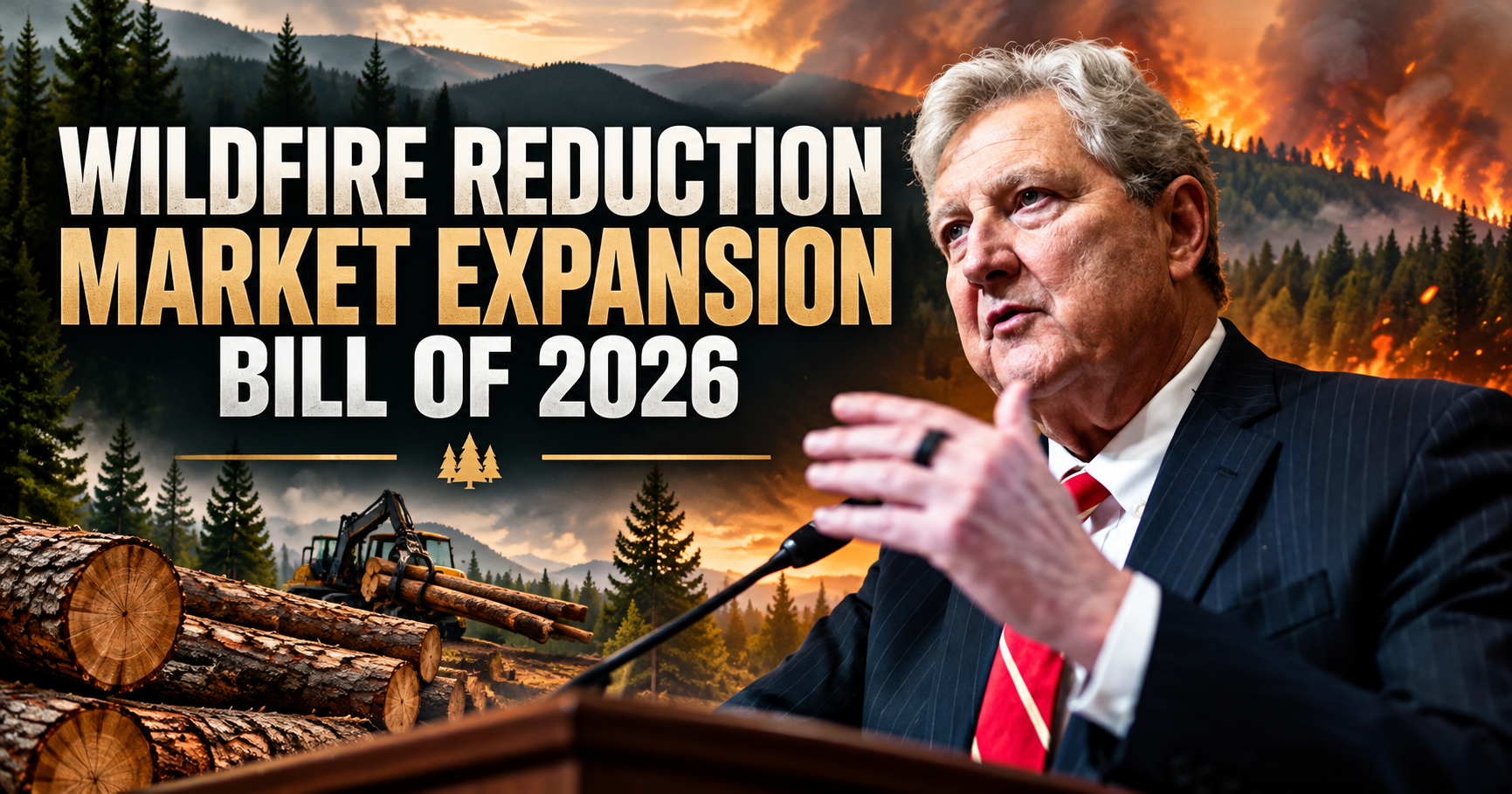
Proposed federal legislation could expand markets for low-value timber, strengthen rural economies, support responsible forest management, and create new opportunities for Louisiana loggers and landowners.
The Wildfire Reduction Market Expansion Act of 2026 (H.R. 9827 / S. 5087) is bipartisan legislation introduced on July 22, 2026, to expand the types of woody biomass eligible under the federal Renewable Fuel Standard (RFS).
By broadening the definition of renewable biomass under the Clean Air Act, the legislation seeks to open additional markets for low-value timber, logging residuals, wood-processing byproducts, and materials removed through forest management and wildfire prevention projects.
For Louisiana, where timber production, logging, trucking, sawmills, and wood-processing operations support rural communities, the proposal has important economic implications. Materials that may currently have limited commercial value could become additional feedstocks for renewable fuel production.
Key Provisions of the Legislation
1. Expanding Markets for Low-Value Wood and Logging Residuals
The bill would expand eligibility under the Renewable Fuel Standard to include additional woody materials and forest products manufacturing byproducts, such as sawdust, wood chips, bark, shavings, wood residuals, paper manufacturing residuals, and other qualifying materials.
This change could create new market opportunities for materials that are often difficult to sell, expensive to transport, or left with limited commercial outlets.
For logging contractors and wood-processing facilities, additional demand could potentially improve the value of material generated during harvesting and manufacturing operations.
2. Creating Value From Forest Management and Timber Harvesting
Forest management activities produce substantial quantities of woody material that may not meet traditional sawtimber or pulpwood specifications.
The legislation would allow additional qualifying materials, including brush, slash, small-diameter trees, storm debris, and wood removed through thinning, ecological restoration, and hazardous-fuel reduction projects, to be considered eligible renewable biomass.
By establishing additional potential uses for these materials, the bill could help offset removal and transportation costs while encouraging more active forest management.
Eligibility would remain subject to applicable land classifications, sustainability conditions, and certification requirements.
3. Supporting Louisiana Loggers and Rural Economies
Louisiana's forest products industry depends on a connected supply chain that includes private forest landowners, logging contractors, timber haulers, equipment operators, sawmills, and manufacturing facilities.
When markets for lower-grade timber become limited, the impact can extend throughout that supply chain.
By broadening potential demand for woody biomass, the legislation could create opportunities to:
- Develop additional outlets for low-value timber and logging residuals.
- Generate potential revenue from qualifying wood byproducts.
- Improve the economic feasibility of timber harvesting and forest management.
- Support business activity throughout rural timber-producing communities.
- Encourage investment in biomass processing, transportation, and renewable fuel infrastructure.
These opportunities would depend on renewable fuel producers developing demand, suitable processing capacity, transportation costs, and the commercial viability of using additional feedstocks.
4. Reducing Wildfire Risks Through Active Forest Management
Excess vegetation, brush, deadwood, and other combustible materials can contribute to wildfire intensity and complicate forest management.
Removing hazardous fuels can be expensive, particularly when the resulting materials have little or no market value.
By creating potential commercial demand for qualifying woody biomass, the legislation could help offset the expense of forest thinning, vegetation removal, and wildfire mitigation activities.
The legislation also addresses qualifying materials removed through defensible-space projects and wildfire risk reduction efforts near developed areas.
Rather than treating these materials solely as disposal costs, the proposal would create additional opportunities to use them as renewable fuel feedstocks.
5. Expanding Domestic Renewable Fuel Production
The Renewable Fuel Standard establishes requirements for renewable fuels used in the nation's transportation fuel supply.
Under the proposed legislation, additional eligible forestry and wood-processing materials could be used as feedstocks for qualifying renewable fuels.
This could create a new connection between forest management, timber harvesting, wood manufacturing, and domestic renewable fuel production.
However, expanding feedstock eligibility would not automatically guarantee a market or make every biomass-derived fuel eligible. Producers would still need to satisfy applicable federal requirements, including those governing approved fuel pathways.
Why This Bill Matters for Louisiana

More markets for wood can mean more economic opportunities throughout the timber supply chain.
Louisiana loggers operate in an industry where profitability depends heavily on the availability of mills, timber prices, hauling distances, operating expenses, and consistent demand for harvested wood.
When markets for low-grade timber and residual materials are limited, logging contractors and landowners face additional challenges in maintaining profitable operations and managing forests effectively.
The Wildfire Reduction Market Expansion Act proposes a way to address part of that challenge by expanding the range of materials that could participate in renewable fuel markets.
Its potential significance extends beyond wildfire prevention. For Louisiana's logging industry, the proposal could provide additional outlets for material that might otherwise have little commercial value.
It could also encourage new relationships among timber producers, wood processors, renewable fuel manufacturers, and investors interested in developing biomass-based fuel production.
While actual economic benefits would depend on market demand, implementation, and infrastructure, expanding the list of eligible materials could give Louisiana's forest products industry additional commercial options.
Louisiana's Congressional Involvement
Louisiana U.S. Senator John Kennedy joined the bipartisan Senate legislation as an original cosponsor, while Congresswoman Julia Letlow joined the House version as a cosponsor. Their participation places Louisiana among the states represented in this legislative effort.
The legislation is still a proposal, not enacted law. As of the latest legislative records reviewed, the House bill remains before the House Committee on Energy and Commerce, while the Senate version was referred to the Senate Committee on Environment and Public Works.
We recognize and thank U.S. Senator John Kennedy and Congresswoman Julia Letlow for their involvement in the Wildfire Reduction Market Expansion Act of 2026.
Louisiana's logging industry depends on strong, dependable markets for forest products. The potential to expand markets for low-value timber and woody biomass deserves serious consideration because of its implications for loggers, landowners, and rural communities across our state.
We encourage our members and everyone connected to Louisiana's forest products industry to learn more about H.R. 9827 and S. 5087, and make their voices heard as Congress considers this legislation.