
LATEST LOGGING NEWS
CONGRESS WOMAN JULIA LETLOW BACKS LEGISLATION TO EXPAND TIMBER MARKETS AND STRENGTHEN FOREST MANAGEMENT
Wildfire Reduction Market Expansion Act of 2026 could create new economic opportunities for Louisiana loggers, forest landowners, and the timber industry.
WASHINGTON, D.C. — U.S. Congresswoman Julia Letlow (R-LA) has signed on as a co-sponsor of the bipartisan Wildfire Reduction Market Expansion Act of 2026 (H.R. 9827), legislation aimed at expanding markets for low-value timber, strengthening rural economies, and promoting responsible forest management across the United States.
Letlow joined the legislation as a co-sponsor on October 1, 2026, adding Louisiana's voice to a growing bipartisan effort to address challenges facing the nation's timber and forest products industries.
Turning Low-Value Wood Into Economic Opportunity
The legislation proposes expanding the definition of eligible renewable biomass under the federal Renewable Fuel Standard (RFS), allowing additional wood materials and forestry byproducts to qualify as feedstocks for renewable fuel production.
These materials include logging residuals, sawdust, wood chips, bark, shavings, paper manufacturing residuals, and other qualifying wood-processing byproducts.
The bill would also expand eligibility for certain materials generated through forest thinning, wildfire prevention, storm cleanup, and other forest management activities, subject to applicable requirements.
By opening additional markets for materials that often have limited commercial value, the legislation could provide new revenue opportunities throughout the forest products supply chain.
Why This Matters for Louisiana's Timber Industry
For Louisiana's loggers, private forest landowners, sawmills, and wood-processing facilities, expanding markets for low-grade timber and residual wood could provide much-needed economic opportunities.
Access to additional markets could strengthen demand for wood products, improve the economic feasibility of forest management, and help sustain logging operations and timber-related businesses in rural communities.
The potential benefits extend beyond individual businesses. A stronger market for forestry byproducts could support jobs, encourage private investment, and help preserve the infrastructure needed to maintain Louisiana's working forests.
Supporting Forest Health and Wildfire Prevention
Beyond its economic implications, the legislation seeks to improve forest management by creating potential commercial uses for woody vegetation and hazardous fuels removed during wildfire prevention and forest restoration projects.
When excess vegetation and low-value woody materials have limited market demand, the expense of removing them can become a significant obstacle to forest management.
Creating additional outlets for qualifying biomass could help offset those costs while encouraging the production of renewable fuels from domestic forest resources.
A Stronger Future for America's Timber Industry
The Wildfire Reduction Market Expansion Act represents an opportunity to address multiple challenges facing the forest products industry: limited markets for low-value timber, rising forest management costs, wildfire risks, and the need for additional economic opportunities in timber-dependent communities.
For Louisiana, where forestry plays an important role in rural economies, the legislation could help strengthen the connection between responsible forest management and economic sustainability.
Congresswoman Julia Letlow's decision to co-sponsor the bill brings additional congressional support to an initiative with potential benefits for Louisiana's logging and timber industries.
The legislation remains under consideration in Congress, and its proposed changes would require enactment before taking effect.
The Louisiana Loggers Association recognizes Congresswoman Letlow for her support of legislation aimed at strengthening America's timber industry and encourages those interested in the bill to contact their congressional representatives to share their views on H.R. 9827.
GABE FIRMENT: LOUISIANA’S LOGGERS DESERVE A STRONG VOICE
Gabe Firment, Candidate for Congressional District 5, comments:
The challenges facing our logging industry are real. Shrinking markets, rising fuel and insurance costs, and workforce shortages are putting tremendous pressure on the hardworking men and women who help keep rural Louisiana’s economy moving.
On August 25, I attended a meeting of the Louisiana Loggers Association in Winnfield and heard directly from industry leaders about these challenges. I have worked closely with the LLA since I was first elected to the Louisiana Legislature in 2019, and I have tremendous respect for the people who make their living in the woods.
I also recently met with Jeffrey and Justin Lasiter of T&T Logging in Tullos and Chris Masengill with Louisiana Central to discuss practical ideas for creating new opportunities. The Lasiters are fifth-generation loggers who take great pride in their work and their industry. Their story represents the generations of Louisiana families who have built their livelihoods around our forests.
Timber is Louisiana’s most valuable agricultural commodity and an essential part of the 5th Congressional District. Our logging contractors, truck drivers, landowners, sawmills, wood-products manufacturers, and forestry professionals support jobs and communities throughout rural Louisiana.
One of the most important priorities is developing new markets for Louisiana wood. When mills close and demand declines, loggers lose customers, landowners lose competition for their timber, truckers must haul farther, and rural communities lose economic opportunity.
That is why I was proud to coauthor HB670 by Rep. Chuck Owen, now Act 664, during the 2026 Legislative Session. The law establishes a framework for Louisiana Economic Development to support the recruitment and expansion of wood pellet and wood-derived fuel manufacturing, including workforce development, site readiness, regulatory pathways, and port infrastructure.
At the federal level, I will support the Wildfire Reduction Market Expansion Act of 2026, bipartisan legislation introduced in both the House and Senate. The bill would expand the Renewable Fuel Standard’s definition of eligible biomass to include additional low-value wood, forest-management byproducts, and mill residuals. It is intended to create new market opportunities for these materials while supporting responsible forest management and wildfire-risk reduction.
As Chairman of the House Insurance Committee, I have also worked to address the insurance challenges facing Louisiana businesses through reforms focused on competition, fraud prevention, litigation, and market stability. Commercial insurance is a significant operating expense for logging contractors and log truckers, and it must remain part of the conversation.
As I seek to represent Louisiana’s 5th Congressional District, one of my top priorities will be working closely with the Louisiana Loggers Association, Louisiana Forestry Association, and all related stakeholders to ensure that our logging industry and wood-products industry as a whole have every opportunity to prosper.
That means working to expand domestic markets, encourage investment in wood-processing facilities, support responsible forest management, strengthen workforce development, protect private property rights, and remove unnecessary barriers to production.
Our loggers are not asking for a handout. They are asking for the opportunity to work, produce, and compete.
I am grateful for the relationships I have built with Louisiana’s forestry community over the past several years, and I look forward to continuing that work. The future of our logging and timber industry is directly connected to the future of rural Louisiana.
Strong forests. Strong markets. Strong rural communities."
THE PERFECT STORM AND CATASTROPHIC LOSS FOR TIMBER INDUSTRY

In early September, the Louisiana Loggers Association partnered with the Mississippi Loggers Association, the South Carolina Timber Producers and the American Loggers Council to build an online, grassroots campaign EDUCATING the public, BUILDING a coalition, and PUSHING the administrations to no longer IGNORE the issues our industry is facing!!
The LLA began with "The Perfect Storm" on our Facebook page and got over 300k impressions across all social media networks.
LLA - Sec/Treasurer, Jeffrey Lasiter has now created a Tik Tok page in hopes to continue educating, building and pushing. LaLoggers
We believe, these Campaigns have helped with our state recognizing the impacts that we, as loggers are facing every day! The Coalition has grown to many of the state associations and other social media heads.
So, if you haven't, please follow the Louisiana Loggers Association on Facebook, La Loggers on Tik Tok, or you can check out my personal pages on all platforms. We know we cannot move the needle, alone, and we have to come together to save our industry, because the future depends on us!
Below is our first Campaign, "The Perfect Storm"
THE LOGGING INDUSTRY HAS BEEN FORGOTTEN.
For generations, the logging and timber industry has been an economic engine for rural communities across this country.
We are an industry of PRODUCERS.
We work.
We harvest.
We haul.
We manufacture.
We employ.
We keep rural America working.
But today, our industry is facing a PERFECT STORM.
LOSS OF MARKETS — Mills are closing, production is shrinking, and demand for our DOMESTIC timber is disappearing.
HIGH FUEL COSTS — Every mile from the woods to the mill costs more, cutting deeper into an already-thin margin.
HIGH COMMERCIAL INSURANCE — Insurance costs have become an enormous burden for logging contractors and log truckers, making it harder and harder to stay in business.
LOW WORKFORCE — Our workforce is aging, qualified drivers and logging professionals are increasingly difficult to find, and there aren’t enough people entering the industry to replace those leaving it.
One of these problems alone would be difficult.
All four at once?
That’s a crisis.
And when logging operations shut down, the impact doesn’t stop at the woods.
It reaches the truck driver.
The mechanic.
The equipment dealer.
The fuel supplier.
The mill worker.
The landowner.
The local business.
And the rural community that depends on the support.
Yet our country continues to add roadblocks and regulations while American production is pushed aside.
When will we incentivize DOMESTIC PRODUCTION?
When will we remove unnecessary barriers that make it harder to produce the resources our country needs?
When will we stop making it easier to buy from somewhere else than to produce it here at home?
WE ARE NOT ASKING FOR A HANDOUT.
We are asking for the opportunity to work, produce and compete.
America cannot afford to lose the people who produce the raw materials that keep this country moving.
Our industry is hurting.
Our rural communities are hurting.
And the clock is ticking.
ARE YOU LISTENING YET?
Because by the time everyone realizes what we’ve lost, it may be too late to rebuild it.
FULL HOUSE FOR 5TH CONGRESSIONAL CANDIDATES
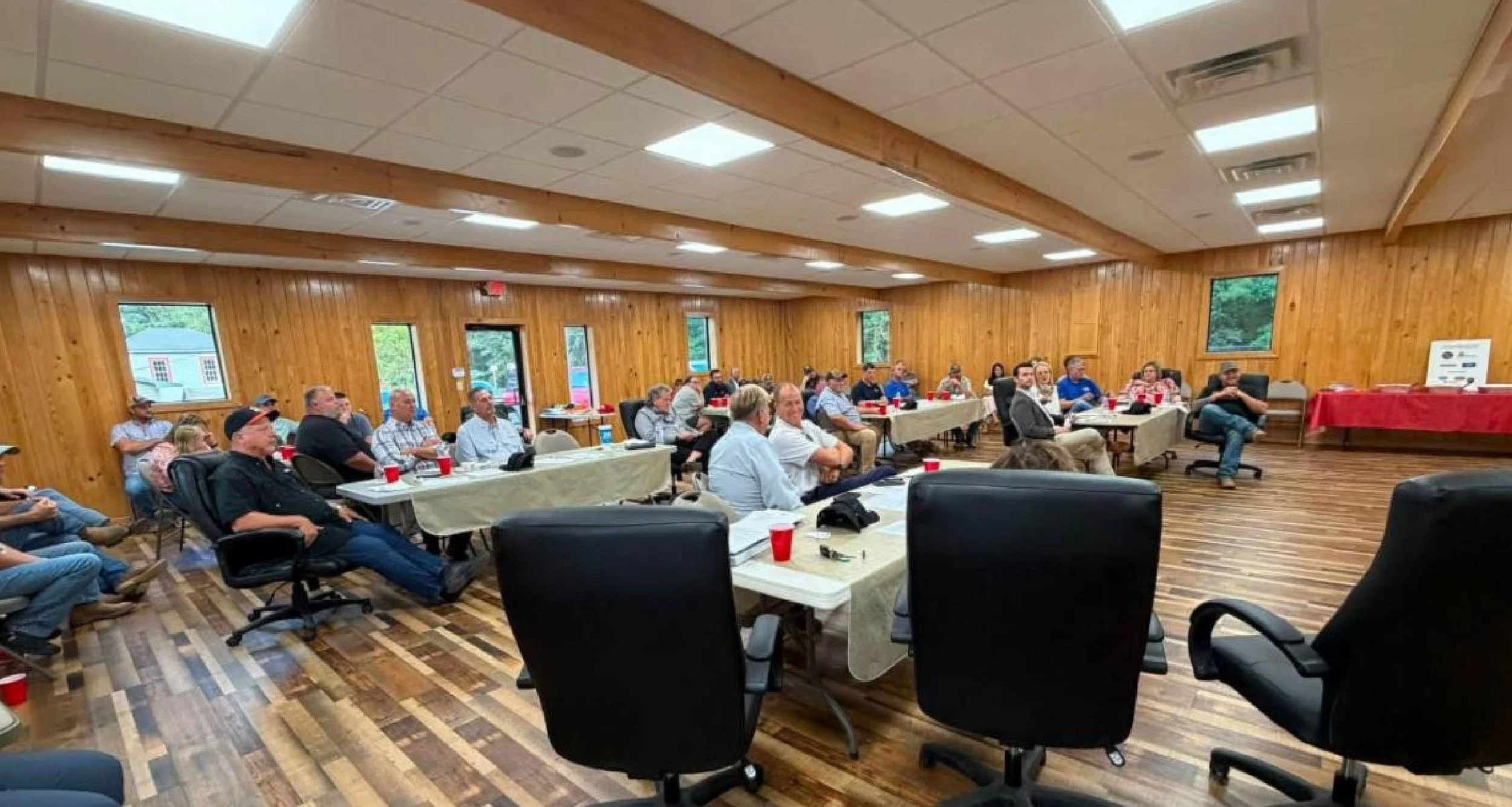
A huge thank you to all of our Louisiana loggers who came out tonight for an important Louisiana Loggers Association meeting!
We had the opportunity to discuss current timber markets, federal legislation, and state legislation in the works, along with the issues that continue to impact our logging contractors, landowners, mills, truckers, and rural communities across Louisiana.
We also want to sincerely thank the three candidates running for Louisiana’s 5th Congressional District for taking the time to join us, listen, learn, and have meaningful discussions about the challenges facing our industry and the broader Louisiana workforce. Thank you Senator Stewart Cathey, Misti Cordell, and Representative Gabe Firment for taking time out of your campaign schedule to spend time with our loggers!
Having elected leaders and candidates willing to sit down with the people who build, harvest, haul, manufacture, and work every day is important. Our industry deserves to be heard…and tonight was a great example of what can happen when we come together and have honest conversations.
Thank you to everyone who continues to stand up for Louisiana logging, Louisiana jobs, and Louisiana’s working families.
Together, we will continue fighting for our industry and the future of rural Louisiana!
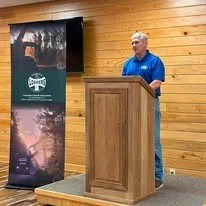

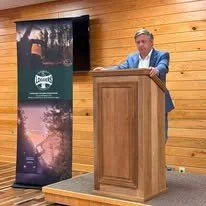
SEN JOHN KENNEDY AND CONGRESS WOMAN JULIA LETLOW CO-AUHOR THE WILDFIRE REDUCTION MARKET EXPANSION BILL OF 2026
Wildfire Reduction Market Expansion Act of 2026: Creating New Opportunities for Louisiana’s Timber Industry

Proposed federal legislation could expand markets for low-value timber, strengthen rural economies, support responsible forest management, and create new opportunities for Louisiana loggers and landowners.
The Wildfire Reduction Market Expansion Act of 2026 (H.R. 9827 / S. 5087) is bipartisan legislation introduced on July 22, 2026, to expand the types of woody biomass eligible under the federal Renewable Fuel Standard (RFS).
By broadening the definition of renewable biomass under the Clean Air Act, the legislation seeks to open additional markets for low-value timber, logging residuals, wood-processing byproducts, and materials removed through forest management and wildfire prevention projects.
For Louisiana, where timber production, logging, trucking, sawmills, and wood-processing operations support rural communities, the proposal has important economic implications. Materials that may currently have limited commercial value could become additional feedstocks for renewable fuel production.
Key Provisions of the Legislation
1. Expanding Markets for Low-Value Wood and Logging Residuals
The bill would expand eligibility under the Renewable Fuel Standard to include additional woody materials and forest products manufacturing byproducts, such as sawdust, wood chips, bark, shavings, wood residuals, paper manufacturing residuals, and other qualifying materials.
This change could create new market opportunities for materials that are often difficult to sell, expensive to transport, or left with limited commercial outlets.
For logging contractors and wood-processing facilities, additional demand could potentially improve the value of material generated during harvesting and manufacturing operations.
2. Creating Value From Forest Management and Timber Harvesting
Forest management activities produce substantial quantities of woody material that may not meet traditional sawtimber or pulpwood specifications.
The legislation would allow additional qualifying materials, including brush, slash, small-diameter trees, storm debris, and wood removed through thinning, ecological restoration, and hazardous-fuel reduction projects, to be considered eligible renewable biomass.
By establishing additional potential uses for these materials, the bill could help offset removal and transportation costs while encouraging more active forest management.
Eligibility would remain subject to applicable land classifications, sustainability conditions, and certification requirements.
3. Supporting Louisiana Loggers and Rural Economies
Louisiana's forest products industry depends on a connected supply chain that includes private forest landowners, logging contractors, timber haulers, equipment operators, sawmills, and manufacturing facilities.
When markets for lower-grade timber become limited, the impact can extend throughout that supply chain.
By broadening potential demand for woody biomass, the legislation could create opportunities to:
- Develop additional outlets for low-value timber and logging residuals.
- Generate potential revenue from qualifying wood byproducts.
- Improve the economic feasibility of timber harvesting and forest management.
- Support business activity throughout rural timber-producing communities.
- Encourage investment in biomass processing, transportation, and renewable fuel infrastructure.
These opportunities would depend on renewable fuel producers developing demand, suitable processing capacity, transportation costs, and the commercial viability of using additional feedstocks.
4. Reducing Wildfire Risks Through Active Forest Management
Excess vegetation, brush, deadwood, and other combustible materials can contribute to wildfire intensity and complicate forest management.
Removing hazardous fuels can be expensive, particularly when the resulting materials have little or no market value.
By creating potential commercial demand for qualifying woody biomass, the legislation could help offset the expense of forest thinning, vegetation removal, and wildfire mitigation activities.
The legislation also addresses qualifying materials removed through defensible-space projects and wildfire risk reduction efforts near developed areas.
Rather than treating these materials solely as disposal costs, the proposal would create additional opportunities to use them as renewable fuel feedstocks.
5. Expanding Domestic Renewable Fuel Production
The Renewable Fuel Standard establishes requirements for renewable fuels used in the nation's transportation fuel supply.
Under the proposed legislation, additional eligible forestry and wood-processing materials could be used as feedstocks for qualifying renewable fuels.
This could create a new connection between forest management, timber harvesting, wood manufacturing, and domestic renewable fuel production.
However, expanding feedstock eligibility would not automatically guarantee a market or make every biomass-derived fuel eligible. Producers would still need to satisfy applicable federal requirements, including those governing approved fuel pathways.
Why This Bill Matters for Louisiana

More markets for wood can mean more economic opportunities throughout the timber supply chain.
Louisiana loggers operate in an industry where profitability depends heavily on the availability of mills, timber prices, hauling distances, operating expenses, and consistent demand for harvested wood.
When markets for low-grade timber and residual materials are limited, logging contractors and landowners face additional challenges in maintaining profitable operations and managing forests effectively.
The Wildfire Reduction Market Expansion Act proposes a way to address part of that challenge by expanding the range of materials that could participate in renewable fuel markets.
Its potential significance extends beyond wildfire prevention. For Louisiana's logging industry, the proposal could provide additional outlets for material that might otherwise have little commercial value.
It could also encourage new relationships among timber producers, wood processors, renewable fuel manufacturers, and investors interested in developing biomass-based fuel production.
While actual economic benefits would depend on market demand, implementation, and infrastructure, expanding the list of eligible materials could give Louisiana's forest products industry additional commercial options.
Louisiana's Congressional Involvement
Louisiana U.S. Senator John Kennedy joined the bipartisan Senate legislation as an original cosponsor, while Congresswoman Julia Letlow joined the House version as a cosponsor. Their participation places Louisiana among the states represented in this legislative effort.
The legislation is still a proposal, not enacted law. As of the latest legislative records reviewed, the House bill remains before the House Committee on Energy and Commerce, while the Senate version was referred to the Senate Committee on Environment and Public Works.
We recognize and thank U.S. Senator John Kennedy and Congresswoman Julia Letlow for their involvement in the Wildfire Reduction Market Expansion Act of 2026.
Louisiana's logging industry depends on strong, dependable markets for forest products. The potential to expand markets for low-value timber and woody biomass deserves serious consideration because of its implications for loggers, landowners, and rural communities across our state.
We encourage our members and everyone connected to Louisiana's forest products industry to learn more about H.R. 9827 and S. 5087, and make their voices heard as Congress considers this legislation.
PRESIDENT TRUMP DELIVERS IMMEDIATE DIESEL RELIEF SAVINGS

Last night, President Donald J. Trump signed an Executive Order that immediately cuts diesel costs by authorizing highway use of tax-free dyed diesel and deferring the federal diesel excise tax through the end of the year. The decisive action — expected to save drivers as much as $100 per fill — puts real money back in the pockets of farmers, ranchers, truckers, loggers, and working families at the exact moment harvest demands it most.
Here’s what they’re saying:
President Donald J. Trump: “Today, I am announcing another unprecedented step to bring down costs. For many years, farm vehicles, construction equipment, and other off-road vehicles have used what is known as ‘red dye’ diesel… which is exactly the same as normal diesel, but is sold tax-free for off-road vehicles and big trucks… Tonight, I am going to sign a historic Executive Order to officially waive the off-road requirement and allow anyone to purchase tax-free red dye diesel for any reason.”
Vice President JD Vance: “Another example of President Trump acting quickly to tackle an urgent issue. In this administration, we’re fighting every day to help hard working Americans, especially our farmers.”
White House Chief of Staff Susie Wiles: “President Trump signed an Executive Order right here in Nebraska to lower diesel costs for American farmers, truckers, and workers. By expanding access to red-dyed diesel and providing federal tax relief, President Trump is once again taking decisive action to put money back in the pockets of hardworking Americans. Promises made. Promises kept.”
Secretary of Agriculture Brooke Rollins: “President Trump is the most pro ranching and farming president in our lifetime. Energy dominance is at the core of putting farmers and ranchers first. This administration has unleashed American energy dominance, and we are now the largest energy producer in the world as a result. While the Administration has structurally changed the energy sector to secure the long-term future of agriculture, we are now taking steps to deal with short term pressures impacting our American farmers. Thank you, President Trump for signing today’s Executive Order enacting enforcement discretion on on-road use of dyed diesel, which will better enable our farmers to deliver America’s harvest during this critical time. And I want to thank Vice President Vance for his help shepherding it to the end.”
American Farm Bureau Federation President Zippy Duvall: “We thank President Trump for recognizing that what happens at the fuel pump directly affects what happens on the farm and therefore at dinner tables across America. Allowing dyed diesel fuel to be used over-the-road will bring welcome relief for farmers because every cent per gallon matters when you’re running a fleet of grain trucks or hauling cattle hundreds of miles. As we detailed in a letter to the president last week, this effort will bring much needed price relief for farmers as they work to complete harvest across the U.S. The federal highway diesel tax is currently more than 24-cents per gallon, so it’s a big deal to farmers to be able to use tax exempt diesel more broadly to get their harvest to market. We appreciate that the president listened to farmers and responded.”
American Soybean Association Vice President Dave Walton: “As U.S. soybean farmers move the 2026 harvest to market, ASA thanks President Trump for his Executive Order that seeks to address high fuel costs impacting our bottom lines. This policy will align with actions taken by many soybean-producing states already, and ASA is encouraged by the administration’s continued focus on agricultural affordability.”
Missouri Gov. Mike Kehoe: “Last week, I signed an executive order taking targeted action to help address the unique fuel and transportation needs of harvest season in Missouri. President Trump’s action yesterday provides commonsense flexibility to lower transportation costs and keep agriculture moving across the entire nation. When we can reduce unnecessary costs for our farmers, that ultimately benefits families across our state and nation.”
Louisiana Gov. Jeff Landry: “Thank you, President @realDonaldTrump! I declared a State of Emergency so our farmers could use the dyed diesel fuel they already had on hand—and now, thanks to YOU, that relief is going nationwide! This is a HUGE WIN for America’s farmers, truckers, and hardworking families. Lower costs and real relief for the people who keep this country moving.”
Tennessee Gov. Bill Lee: “On Friday, I directed TN state departments to suspend enforcement of dyed diesel restrictions through the end of October to provide relief for farmers & foresters during harvest season. Thank you, @RealDonaldTrump, for standing with the Tennesseans who feed & fuel our country.”
Nebraska Gov. Jim Pillen: “This action expands on state efforts I enacted by executive order just a few weeks ago. This will greatly assist farmers who are dealing with extraordinarily high diesel prices, impacting everything they do – from field operations to transportation of their products and livestock. I appreciate that President Trump signed his order today in Nebraska. Agriculture is the tip of the spear in our great state, and we need to continue to do all that we can to feed the world and save the planet. President Trump knows that and we appreciate his support.”
Mississippi Gov. Tate Reeves: “President Trump has announced he is signing an executive order that will defer the federal excise tax on dyed diesel and allow for highway use. Because of the EO signed by @POTUS, I have spoken with Commissioner @TindellSean and he plans to direct the Commercial Transportation Enforcement Division of the Mississippi Department of Public Safety to not enforce the dyed diesel prohibition on highways. Thanks to this executive order and Commissioner Tindell’s swift action, much-needed relief will be delivered to our nation’s farmers, truckers, ranchers and loggers, as well as a wide range of other industries that rely on diesel. This will have positive ripple effects on America’s economy and your wallet. I’d like to thank President Trump and his administration for working quickly to provide this relief.”
Iowa Gov. Kim Reynolds: “Today, in line with President Trump’s executive order, I suspended state penalties for using dyed diesel to transport certain ag products on public roads. This will lower costs for farmers through the harvest and beyond by opening access to tax-free fuel.”
South Dakota Gov. Larry Rhoden: “In response to these extraordinary times, President Trump has ordered a suspension of enforcement of the federal dyed diesel fuel for taxpayers on highways and public roads. Therefore, I am directing the Department of Public Safety to adjust enforcement priorities regarding the use of dyed diesel fuel. Many farmers maintain on-site supplies of dyed diesel fuel for nontaxable, off-road use. By taking this action, we will provide meaningful relief to South Dakota farmers. Similarly, President Trump’s order will allow all taxpayers to realize meaningful savings from using dyed diesel.”
North Carolina Gov. Josh Stein: “Last week I took action to help provide some relief at the pump for North Carolina’s farmers, and I asked the IRS to step in to pause enforcement of the red-dyed diesel tax at the federal level. I am pleased to see farmers across the country will now get this same relief. Let’s keep working at every level of government to help people keep more money in their wallets.”
Tennessee Commissioner of Agriculture Andy Holt: “Governor Lee’s directive, coupled with President Trump’s federal executive order, provides timely relief for Tennessee farmers, forest product producers and timber harvesters facing high diesel costs during harvest season. Agriculture and forestry are essential to Tennessee’s economy, and this temporary flexibility will help keep producers working, products moving, and rural communities supported. We appreciate Governor Lee’s leadership, President Trump’s action, and Secretary Rollins’ support for American agriculture.”
Kentucky Commissioner of Agriculture Jonathan Shell: “Huge win for Kentucky farmers. President Trump signed an executive order expanding access to tax-exempt red-dyed diesel. With harvest underway and high fuel costs weighing on farm families, this will provide immediate relief and help lower costs. Thank you President Trump for standing with our farmers.”
Mississippi Commissioner of Agriculture and Commerce Andy Gipson: “A HUGE thank you to President Trump and Governor Reeves for taking action to allow red-dyed off-road diesel fuel. A huge help to our farmers, loggers and truckers here in Mississippi and across America.”
Alabama Farmers Federation President Jimmy Parnell: “We appreciate President Trump joining Gov. Kay Ivey in allowing dyed diesel fuel to be used without penalty for highway use. With about a dozen states easing enforcement of off-road diesel rules, President Trump’s executive order provides consistency across the country and ensures farmers and timber producers will not be penalized when they cross state lines to market their products.”
Louisiana Farm Bureau President Richard Fontenot: “Anything helps, especially as we work to get the crops out of the fields. I’m appreciative of the governor’s (and president’s) efforts to give us any relief during this time.”
Tennessee Farm Bureau Federation: “We join American Farm Bureau President @ZippyDuvall in applauding the executive order signed by President Trump to suspend enforcement of dyed diesel fuel restrictions for agricultural operators, giving farmers a break.”
Sen. Tom Cotton: “Allowing on-road use of red diesel will give Arkansas farmers much-needed relief. This is a welcome step by the administration that I’ve long called for.”
Sen. Chuck Grassley: “Thx to Pres Trump for listening to farmers & temporarily allowing off-road dyed diesel for highway use Lowering costs for FARMERS DURING HARVEST”
Sen. Bill Hagerty: “@POTUS is taking action to lower diesel prices, cutting costs for Tennessee farmers who keep food moving from the farm to families’ dinner tables.”
Sen. Roger Marshall: “Temporary expanded use of dyed diesel allows producers to utilize more fuel options during harvest and lightens the cost of production for farmers and ranchers at a crucial time. Thanks to the White House for listening to farmers. We still have more work to do.”
Sen. Mike Rounds: “Following my letter last week, I’m pleased to see that the President is taking steps to lower fuel prices, including a review of certain taxes on diesel. This is an opportunity to offer real relief to South Dakotans who continue to pay higher prices at the pump, particularly farmers and ranchers who are in the middle of harvest. We’ll continue to work on addressing the high cost of living impacting our state.”
Rep. Mark Alford: “@POTUS just signed an order letting truckers and farmers run tax-free dyed diesel on the highway through year’s end — no interest, no penalties. That puts real money back in the pockets of the folks who haul our freight and grow our food.”
Rep. Tim Burchett: “A few weeks ago, I called on @POTUS to take action on diesel prices. Last night, President Trump signed an Executive Order to put money back in the pockets of American farmers, truckers, and workers.”
Rep. Don Davis: “It’s a much needed Executive Order that provides temporary relief for farmers and working families facing record fuel costs.”
Rep. Russell Fry: “No one cares more about affordability than President Trump and Congressional Republicans.”
Rep. Ashley Hinson: “High diesel prices are hurting our truckers, farmers, and all Iowans, and this executive order is a step in the right direction to deliver relief. We should be using every tool available to lower fuel prices and provide flexibility for Iowa farmers during harvest season. I’ll continue to push for bipartisan policies that lower costs at the pump and the checkout line.”
Rep. Rich McCormick: “A farmer can’t wait for prices to come down. The crop is in the field right now. This week @POTUS signed an order that temporarily allows tax-free dyed diesel to be used on the highway. The federal diesel tax is deferred through the end of the year, with no interest and no penalties. That’s about $60 on a 250-gallon fill, and more where states follow suit. It’s temporary, and it’s not the whole answer. But for the families who feed America, it is real relief at a critical time. The long-term fix is more supply and more refining capacity. That is the work still ahead.”
Rep. Zach Nunn: “This is a good first step and it will deliver real relief for farmers facing record diesel prices in the middle of harvest.”
Rep. Jason Smith: “I applaud President Trump’s executive order today to provide immediate relief by deferring the excise tax for on-road use of dyed diesel until the end of the year. This is a much-needed step to lessen the burden that increased fuel prices have had on farmers, ranchers, and the entire agricultural community. This executive order is only a first step — it is crucial to provide lasting relief for the hardworking Americans who feed, fuel, and clothe our nation.”
Rep. Greg Steube: “President Trump is delivering relief for America’s farmers and truckers. My RED Fuel Act is sitting in Congress waiting to make this relief permanent. House Leadership needs to bring us back to D.C. and pass it!”
GOVEROR LANDRY DECLARES DIESEL EMERGENCY

Baton Rouge, La—Governor Landry has issued an Executive Order declaring a state of emergency, allowing Louisiana farmers and timber harvesters to use the dyed diesel fuel they already keep on hand. The order comes at the peak of harvest season, with diesel at the highest price ever recorded in this state. EO attached.
"We’re not going to sit on the sidelines while Louisiana farmers are paying record prices to harvest the crops that feed our families and support our economy. We have an opportunity to provide immediate relief, and that’s exactly what we’re doing,” said Gov. Landry.
Background:
Dyed diesel is ordinary diesel fuel dyed red to mark it as off-road fuel. Farmers and loggers buy it for tractors, skidders, and irrigation pumps, and state law has long barred them from burning it in a licensed highway vehicle. This Executive Order suspends the penalty through October 22, 2026 for vehicles registered as Class 2 (Forest Products) or Class 5 (Farm Use) during this time of peak harvesting operations.
The Order also directs the Secretary of the Louisiana Department of Revenue to request federal penalty relief from the IRS by the end of the week.
The diesel shortage driving these high prices is a national issue. U.S. inventories of distillate fuel oil are currently 12.5 percent below the five-year average, contributing to higher domestic diesel prices. At the same time, U.S. net exports of distillate fuel oil remain near five-year highs. In Louisiana, the average retail price of diesel has reached an all-time high of $6.03 per gallon, 112 percent higher than the price the LSU AgCenter used to develop its 2026 crop enterprise budgets.
Although this is just a temporary savings to an ongoing issue, The Louisiana Loggers Association is extremely thankful for the efforts of Louisiana Governor Jeff Landry for not just hearing us but jumping into action to help!!
Thank you Governor Landry!
If You’re Not at the Table, You’re On the Menu
The Louisiana Logger’s Association and Political Action Committee (PAC) convened a significant meeting at RoyOMartin in Alexandria, Louisiana, bringing together industry professionals and stakeholders to discuss pressing issues facing the logging community. The event featured a keynote address from Joe Mapes, a prominent figure from Mapes & Mapes, who underscored the critical need for loggers to engage actively in the political landscape. He emphasized that without a seat at the decision-making table, loggers risk becoming marginalized, stating emphatically, “If you’re not on the table, you’re on the menu!” This metaphor served as a rallying cry for attendees, highlighting the necessity of advocacy and representation in legislative matters that directly impact their livelihoods.
In addition to Mapes' insights David Cupp provided an overview of the shifting political climate in the United States and its potential implications for the timber industry. Cupp pointed out that while the timber sector has faced significant challenges in recent years, including a downturn in production and profitability, there are emerging opportunities on the horizon. He elaborated on the various factors contributing to the industry's decline, such as evolving market demands that favor alternative materials, increased competition from other sectors, and the imposition of stringent environmental regulations that complicate logging operations.
Cupp's remarks painted a picture of an industry at a crossroads, where proactive engagement in political discourse could lead to favorable outcomes. He encouraged attendees to remain vigilant and involved, as the evolving political landscape could usher in policies that support sustainable logging practices and bolster the timber market. The meeting served not only as a platform for sharing insights but also as a call to action for loggers to unite and advocate for their interests in a rapidly changing environment. By fostering a collective voice, the Louisiana Logger’s Association aims to ensure that the concerns of loggers are heard and addressed, ultimately working towards a more resilient and profitable future for the timber industry.


Martinez Family Host LAA Meeting at Toledo Bend


We would like to take this opportunity to express our heartfelt gratitude to Insurance Commissioner Tim Temple and Senator Alan Seabaugh for their presence at our recent meeting. Their participation was invaluable, as they provided our members with crucial updates on the ongoing efforts to tackle the current insurance crisis that has been affecting our community. Their insights and commitment to addressing these pressing issues are greatly appreciated.
Furthermore, we extend our thanks to Mark Files for his informative safety update, which offered our members essential information and resources to enhance safety awareness within our community. His expertise and dedication to promoting safety are commendable.
Lastly, we would like to express our sincere appreciation to the Martinez family for graciously hosting us at their beautiful venue on Toledo Bend. Their hospitality created a warm and welcoming atmosphere that contributed to the success of our gathering. We are grateful for their generosity and support. Thank you all for making this event a meaningful and productive experience.
Louisiana Loggers Association Endorse Jeremy LaCombe for Senate

The Louisiana Loggers Association would like to announce the endorsement of State Representative, Jeremy LaCombe for Senate District 17.
“It has been a great honor to work alongside the Louisiana Loggers Association, advocating for small business owners who are the backbone of the timber industry. I am proud to stand with them as they work to improve the environment in the state, for this great industry.” - State Representative Jeremy LaCombe
Representative LaCombe has been a constant supporter of the Louisiana Loggers Association and the timber industry as a whole, personally fighting to bring new markets and advocating for the loggers. LaCombe truly appreciates what this industry brings and contributes to our rural communities and the state of Louisiana. Understanding the daily battle that Louisiana Loggers carry out, as they defend their livelihoods and manage the vast timberland of our great state.
The LLA encourages the citizens of Louisiana Senate District 17 to cast their votes for Jeremy LaCombe.
Learn more about Jeremy at www.jeremylacombe.com.
Louisiana Loggers Association Endorse Julia Letlow for Congress

The Louisiana Loggers Association would like to announce the endorsement of Congresswoman Julia Letlow for Congress District 5. Over the last year and a half, Congresswoman Letlow has shown her passion for the citizens and the progress of the district. Letlow currently sits on the House Committee on Appropriations, holding seats on the Subcommittee on Agriculture, Rural Development, Food and Drug Administration, and the Subcommittee on State, Foreign Operations, and Related Programs. Letlow has proven her hard work, dedication, and perseverance while being a full-time congresswoman and full-time mom of two.

“The timber industry is Louisiana’s second largest manufacturing employer, and forest land covers nearly half of our state. I appreciated being able to spend time with loggers in Winn Parish and discussing how we can more effectively promote logging as a crucial economic engine in our region.” —Congresswoman Letlow (Logging Tour)
“Louisiana hasn’t had a seat at the table in House Appropriations since Congressman Rodney Alexander left office nearly a decade ago. Now, our state will be there not just during the larger debates over the federal budget, but also in a much stronger position when it comes to those critical moments. Like the ones we’ve experienced in the past few years when our state required additional assistance from Congress due to natural disasters. Our taxpayers send millions to Washington every year, and while I don’t have power over how much of your taxpayer dollars are sent to Washington, I do have influence over where those dollars go. I pledge to be the fighter who will bring those dollars back home. I’m committed to finding every opportunity to lower your taxes and being a responsible steward of our government’s funding.” - Congresswoman Julia Letlow (Appropriations Committee)
The Louisiana Loggers Association is here to support and assist in any way possible to reinforce Congresswoman Letlow’s objectives. We encourage all the citizens of District 5 to cast their votes for Congresswoman Letlow.
-Toni McAllister, LLA Executive Director, www.louisianaloggers.com
#TEAMJULIA
Learn more about Julia at Representative Julia Letlow | (house.gov).
Louisiana Agriculture Transportation Group Self-Insured Fund: SB437 and HB1078

SB437 – Sen. Robert Mills and HB1078 – Rep. Alan Seabaugh will authorize the creation of the Louisiana Agriculture Transportation Group SIF
This is such an exciting and forward-thinking bill that will allow the agricultural industries to take the insurance crisis into our own hands and move forward the best we can. Offering another provider within the state will grow competition, thus helping to move insurance premiums into affordable waters. SB437 and HB1078 will authorize the creation of the La Ag Transportation Group SIF for the purpose of providing auto coverage for vehicles that transport timber and agriculture products. This law will provide an opportunity for five or more Louisiana Timber or agriculture companies, who are not public entities, each of whom have a positive net worth and are financially solvent, to pool their liabilities and self-insure for the purposes of maintaining automobile coverage for timber and agriculture transportation vehicles. The law will require that all members of the fund MUST also be a member of one or more “bona fide trade or professional association”. The association must be an active trade or professional association that promotes Louisiana Timber or agriculture production, is charted and domiciled in Louisiana, has been in existence and conducted regular meetings for at least five years and is not established for the primary purpose of operating a self-insured fund.
In the early 90’s, Work comp costs rose exponentially to the point where businesses were folding due to the increased costs. Self-insured funds were created to provide reasonable costs and the added benefit of returning unused dividends to their members. The creation of this fund will hopefully be the solution to the insurance crisis, just as the work comp funds were in the ‘90s.
“Growing up in Bienville Parish, I recall how the logging and agriculture industries were once the economic engines of small North Louisiana towns. Family-owned logging companies and farms provided jobs for young people but also provided support for retail shops, churches, and high school fundraising activities in their communities. The loss of the logging industry in many of those small towns in recent years can be traced to one thing: unavailable or unaffordable log truck insurance. The resulting loss of many of those family-owned logging companies has had a domino effect in rural North Louisiana, causing other businesses to close their doors and whole communities to suffer. It has truly been an honor to assist state Senator Robert Mills in drafting SB 437, to make log truck insurance more affordable for some very deserving Louisiana family-owned businesses. Fighting for hard working families and small businesses is what Sen. Mills does best.” – Carla S. Roberts (Attorney with the Louisiana Senate)
“It was the culmination of nearly three years of teamwork when the SB 437 was passed during the 2022 legislative session. The high cost of liability insurance for log trucks was the subject of one of my first bills in 2020. That effort failed but with continued efforts of my Senate Attorney, Ms. Carla Roberts of Saline, La and the addition of Alan Seabaugh and Jack McFarland as co-authors, we restructured the effort and successfully passed into law a self-insurance option for logging and agricultural trucking operators that should be a game-changer for the best operators. SB 437 takes advantage of the latest insurance developments and with an emphasis on best practices, logging and agricultural truckers should be able to acquire affordable liability insurance and continue their very valuable services to our state.” – Senator Robert Mills
“Nobody should ever go out of business or stop operating due to an inability to obtain affordable liability insurance. This legislation is not going to completely solve the litigation problem or make it go away, but it is a crucial step in providing relief to businesses that really need and deserve a break. Thousands of Northwest Louisiana families are fed and supported by the logging industry. It has earned our support. It was an honor for me to be involved in drafting and passing this legislation.” – Representative Alan Seabaugh
“Almost all large companies use some form of self-insurance to manage their risk. Since these companies have the financial resources to handle the exposures, it is a better management tool than transferring the risk to an insurance company. With the passing of SB437, the state of Louisiana has now given the same tool to smaller entities. A self-insured group allows multiple companies and individuals to pool their risk and exposure to obtain the leverage in the insurance marketplace. The group will have a lower cost structure than an insurance company, but the strongest advantage will be that profits are returned to the members of the group and not the stockholders of an insurance company. Investment income accrues to the group. The program will buy reinsurance to protect the collective assets of its members and limit the groups exposure. SB437 is specifically designed to cover the vehicle exposures arising out of the agricultural and timber industries. We look forward to seeing how the Louisiana Agriculture Transportation Group Self-Insured Fund can change the marketplace for the betterment of Louisiana companies.” – Terry Duke, Louisiana Loggers Self-Insured Fund, Gallagher
Although much work has to be done, the Louisiana Loggers Association is extremely optimistic on the future of this program. We look forward to developing and growing with the Louisiana Agriculture Transportation Group to help move the agricultural industry forward.
Toni McAllister, Executive Director

Louisiana Forests – A Solution to Climate Change? – An ECONOMIC ENGINE
Climate change is a controversial topic that usually sparks many different FEELINGS here in Louisiana! But I think that we can agree, that leaving a smaller footprint on our planet will provide a healthier environment for our future generations. But no matter what side of the fence you are on “climate change” could be a huge economic engine for Louisiana!!
Healthy managed forests sequester CO2 and then can be converted into an energy source or be used to build mass-timber buildings in which it continues to sequester CO2. Resources such as iron ore, coal, and limestone, once removed, are gone forever. Trees can be returned to the earth and renewed for future generations. No other resource on earth can match its environmental advantages!
Louisiana Provides an amazing opportunity to find a solution! But HOW? Louisiana’s vast timberlands cover 14 million acres almost 50% of our land mass, making it the state’s greatest single land use. Louisiana timber owners reforest the land each year with over 128 MILLION saplings (young trees)!! YES, I said MILLION!! That is a minimum of 29 trees for every Louisiana Citizen!! Through the work of Proper Timber Management, renewable growth, harvesting contractors and haulers, manufacturing facilities, and Replanting and Reforestation, Louisiana provides one of the largest fiber baskets in the US. Our Grand timberlands are known as one of the major CARBON SINKS! Through the engineering of DEF systems on our engines and carbon offsets; The Louisiana Timber Management teams are working on CARBON NEGATIVITY!!
What’s a CARBON SINK: “Forests are typically carbon sinks, places that absorb more carbon than they release. They continually take carbon out of the atmosphere through the process of Photosynthesis” (http://www.nationalgeographic.org/encyclopedia/carbon-sources-and-sinks/)
What are CARBON OFFSETS: An action intended to compensate for the emission of carbon dioxide into the atmosphere as a result of industrial or other human activity. PLANTING 12-15 trees for every ONE, Harvested. Young trees or saplings sequester carbon at a much higher rate than that of older trees because they need the carbon to grow.
For many years, Louisiana Timber Management teams have been providing clean air, great jobs and great products that are 100% recyclable for our everyday use. But here in Louisiana, we are on the brink of something monumental that will move the timber industry even further into CARBON NEGATIVITY by CARBON CAPTURE and SEQUESTER!! Talk about Fighting Climate Change!
Biofuels from trees! Because of the advancement in science and the vast timberlands, sustainability and reforestation in our state, Louisiana is the perfect place to work towards Biofuels from our amazing trees. Our Louisiana Logging Work Force is second to none (YES! I am biased and this is my opinion!) and will be able to provide the feedstock needed to produce diesel, while capturing the carbon and storing it in tanks deep under the ground! Diesel from trees and not just the trunk but the branches, needles and fruit. Although, electric “everything” maybe enticing…. Living in the path of so many natural disasters prevent Louisianians from ever being able to fully depend on electricity. Along with our rough terrain?? Biofuels is the future and Louisiana is prepared!
What is CARBON CAPTURE and Sequester: It is the process of capturing carbon dioxide before it enters the atmosphere, transporting it, and storing it (carbon sequester) for centuries.
No matter your FEELINGS, on renewable harvests and hauling, Louisiana Loggers and Log Haulers work to provide healthier forests, fire preventions, and help cut down on disease within the forests. While providing recyclable products that decompose or can be recycled and reused.
ECONOMIC ENGINE: If keeping the environment clean or leaving a smaller imprint on the planet, doesn’t excite you, JOB creation, should! Foresters, Loggers, Log Haulers, Manufacturing, Land managers and the supply chain from the Forest Industry make up the second largest employer in the state of Louisiana. It’s the gift that keeps on giving! Unlike other fuel sources, we can continue to rely on the regrowth of Timber Plantations that will continue to provide great resources for many generations to come!
Louisiana’s Green Fuel Plant: https://strategicbiofuels.net/louisiana-green-fuels/
More information on Louisiana Loggers Green Efforts: https://www.louisianaloggers.com/news/geaux-green-louisiana
More information about ENSYN: Ensyn - Renewable Fuels and Chemicals
Follow us on FB, Twitter, and Instagram to stay up to date on News You Can Use.
-Toni McAllister, Executive Director
The Louisiana Loggers Association Endorses Jeremy Stine for Senate District 27

Jeremy was born and raised in Calcasieu Parish. From a young age, Jeremy learned from his grandfather and father the important values of hard work, service, community, and faith. In high school, Jeremy worked from the bottom up, learning each department in the family business, Stine Lumber, which is based in Sulphur, Louisiana.
Jeremy currently serves as the Marketing Director for Stine Lumber. As Marketing Director of a company with over 850 team members and $300 million in revenue, he is responsible for the overall vision and execution of Stine’s business and marketing strategy, which includes online marketing and e-commerce.
EARLY VOTING: OCT. 30-NOV. 6 | ELECTION DAY: NOV. 13 (EXCLUDING SUNDAY, OCTOBER 31)
Speaker Clay Schexnayder Receives 2021 Louisiana Logger Association Champion Award

Speaker Schexnayder CHAMPIONED the Louisiana Logger Relief Program that was added to his HB642 during the regular 2021 session! Schexnayder has become a remarkable supporter for the Logging and timber industry and the LLA is grateful for his advocacy!
Thank you Speaker Schexnayder and Congratulations on becoming the LLA's 2021 CHAMPION!



Louisiana Logger Relief Bill Passes! (HB642)

Final passage, today, for HB642. speaker Schexnayder’s bill to disperse the American Rescue Dollars includes that of the “Louisiana Logger Relief Package”!! Speaker Schexnayder, Representative Jerome Zeringue (chair of appropriations), Representative Jack McFarland(chair of house ag), and Senate President Page Cortez along with numerous legislators that went to bat for the sometimes forgotten small business, timber harvesters, has passed a $10M dollar relief package that will provide a much needed aid for this struggling industry. Louisiana Loggers are paid on production, alone (the booming lumber prices do not affect the stumpage prices or harvesting). Coming out of the extremely wet season of 2019, 2020 brought tight quotas, hurricanes, and many other obstacles!
The Louisiana Loggers are extremely grateful for the extended hand from the legislators!
“Extremely grateful for the hard work of the legislature to provide relief to the men and women who go out and harvest Louisiana’s number one ag crop, every day” ~Josh McAllister
“To be embraced for their hard work and acknowledged as a vital role in the state, Louisiana Loggers always make me proud to advocate for these amazing people who live quiet lives, working day in and day out to provide for rural Louisiana, Harvesting the number one ag crop in the state.... I’m speechless and i know this financial aid will help so many, in such a difficult time” ~Toni McAllister

Louisiana Tort Reform Progress, But We Need More
The Louisiana Loggers Association is made up of loggers, log haulers, and businesses that support our industry. You’re not going to get the original social distancers out of the woods unless there is a major crisis within our industry. In 2016 the rising prices of commercial liability insurance could no longer be ignored. Unsustainable rates started causing many logging businesses to fold. It was time to take action.
Over the past 5 years prices rose EXPONENTIALLY and we have been fighting hard to bring awareness and find relief! Finally, during the 2020 First Extraordinary Session, the Civil Justice Reform Act was passed with a collaborative effort and signed into law (Act 37). There were many parts to Act 37, but the one most important to our crisis, was the “collateral source” piece.
Lawmakers claim that three years is the magic number, in reaping the benefits of the Civil Justice Reform Act, BUT we are finally starting to breathe a little lighter, NOW!! Two new underwriters have moved into the state and competition is beginning…….well not much, but some!
Our agents are reporting that 2021 renewals are mostly unchanged, but a few loggers have seen as much as 25% - 40% decreases. Insurance agents are finally calling around to see if other writers will beat or match prices. Rates are certainly not where they need to be, but we have made significant progress and will continue to fight.
Although it's starting to look as though we are gaining ground in our favor, more, and more drivers get on the roads every day. The number of DISTRACTED DRIVERS are increasing RAPIDLY and our only defense is dash cameras and defensive driving training! The men and women who are in the driver's seats have to be completely focused on the task at hand.
The LLA is thankful for the impact that the Tort Reform has brought, but there is still work to be done!
Toni McAllister, Executive Director, Louisiana Loggers Association
Geaux Green Louisiana!
Louisiana has been going green since 1904. Even before the U.S. Forest Service was formed, Louisiana focused on producing, promoting, and protecting these vast timberlands.

Photo by Thomas Johnson. Check out his awesome YouTube channel.
Forests cover 14 million acres, about 50% of Louisiana’s land area, making it the state’s greatest single land use. Louisiana landowners reforest the land each year with over 128 MILLION saplings, a minimum of 29 trees for each Louisiana citizen. In addition to the reforestation of the land, wildfire protection, forest health, and regeneration of specified species are improved, each year.
Trees Sequester CO2: On average, one acre of new forest can sequester about 2.5 tons of carbon, annually. Young trees absorb CO2 at a rate of 13 pounds/tree each year. Trees reach their most productive stage of carbon storage around 10 years and are estimated to absorb 48 pounds/tree per year. Most people do not realize that the younger trees (or saplings) store carbon at a much faster rate than that of older trees because they are producing food (nuts, fruit, etc.) at a much higher rate.
Why is Louisiana Forestry and Timber Harvesting Considerably more impressive than that of other states? you guessed it, our HUMIDITY (not only keeps us looking young and fresh, but it also aids in the rapid growth of this amazing renewable resource)!
Louisiana Loggers and our green machines: Logging Equipment not only has become safer and extremely computerized and mechanized but also, green. With the addition of the DEF systems for each engine, this Diesel exhaust fluid exchanges the grimy air pollution with pure nitrogen and water vapor! These DEF systems are not only on the large harvesting equipment but on our log trucks and our passenger, diesel vehicles, as well.
WHY HARVEST?
Harvesting Timber in Louisiana allows the production of everyday things such as masks, filters, toilet tissue (which we used a LOT of in 2020) disinfecting wipes, cleaning products, cellulose-based pill fillers, wood pallets to move medical supplies and goods, lumber/plywood for structures and fuel for keeping our homes warm, etc. In fact, wood products make up 47% of all raw materials used in manufacturing, in the US.
It is renewable: Wood is 100% recyclable, biodegradable, and durable – Sometimes lasting for centuries. When it is no longer needed, it can be returned to the earth and renewed for future generations. Resources such as iron ore, coal, and limestone, once removed, are gone forever.

Proper Forest Management Prevents Fires: Not only is reforestation important but the importance of thinning the undergrowth of forests to prevents massive – wildfires and disease is a must to sustain healthy forestlands!
Louisiana Loggers, foresters, and timber management teams have been doing it RIGHT for over 100 years! Sure, it has not always been perfect, but we are constantly refining the process to become more environmentally friendly. Trees are remarkable and renewable resource that provides not only great products and jobs for our citizens, but clean air for now and for the future!
Plant a tree, buy paper products (instead of filling a landfill with plastic), and learn more about how essential Louisiana Loggers and proper forest management is to our state, climate, and future!
GEAUX GREEN LOUISIANA!
Toni McAllister, Executive Director, Louisiana Loggers Association
http://www.louisianaloggers.com
Come celebrate the Timber Industry at the Louisiana Forest Festival! April 23-24 in the heart of the forest, WINN PARISH www.laforestfestival.com
Louisiana Loggers Association Announce the Endorsement of Shelly McFarland for BESE District 4

Louisiana Loggers Association would like to announce the endorsement of Shelly McFarland for BESE District 4 which includes Caddo, Bossier, Webster, Bienville, Red River, DeSoto, Natchitoches, Winn, Sabine, and Vernon Parishes.
As an association dedicated to preserving and supporting the logging profession, the LLA recognizes the importance of a high-quality K-12 education in preparing students of today to become the professionals of tomorrow. Many present-day, Louisiana Loggers have obtained post-secondary education and acknowledge its importance to the future of our industry, our parishes and our state. Additionally, the Louisiana Loggers Association recognizes the importance of providing relevant career pathways, training and experiences to students while they are in a K-12 setting so our children can secure high-quality jobs in their own backyard.
BESE District 4 encompasses many small communities with rural schools that may seem insignificant to the larger and more densely populated areas within the district. With Shelly McFarland as our representative of BESE 4, she can bring attention to the NEEDS of our people. Providing a voice for these communities is essential to the FUTURE of our children, families and businesses. McFarland’s work ethic is second to none. While being a full-time mother and running multiple small businesses in Winn Parish, she is also a Louisiana Logger.
Please consider voting for Shelly McFarland for BESE 4. The LLA is confident that McFarland will bring her strong work ethic, desire to provide an excellent education and career preparation for all students, and common sense solutions and innovations to Baton Rouge so ALL students and families in District 4 have access to opportunity and prosperity in life.
-Toni McAllister, LLA Executive Director